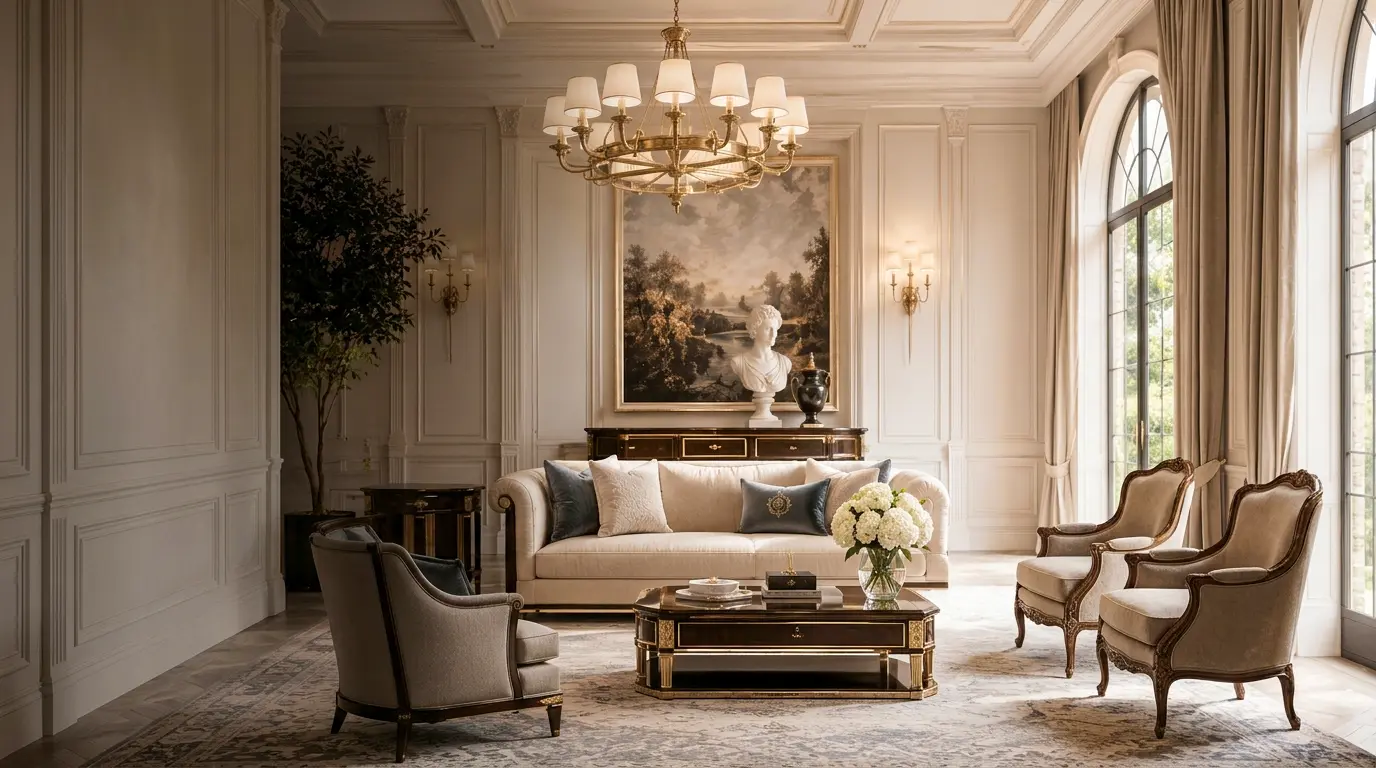
 01
STUDY & WORKSPACE
Executive Desks & Study Furniture
Custom desks and complementary study furniture for private libraries, executive offices and dedicated residential workspaces.
Furniture Scope
Writing Desks · Executive Desks · Study Furniture
OE-FASHION BESPOKE FURNITURE MANUFACTURING
Custom Furniture Manufacturing for Designers, Private Residences & Hospitality Projects
From individual bespoke furniture pieces to coordinated multi-room commissions, OE-FASHION works with designers, private clients and project professionals to translate furniture references and project requirements into made-to-order furniture.
Explore the furniture categories available for custom manufacturing at OE-FASHION. From individual statement pieces to coordinated furniture requirements across private residences, executive interiors and hospitality projects, each category provides a starting point for defining your furniture scope.
01Custom desks and complementary study furniture for private libraries, executive offices and dedicated residential workspaces.
Writing Desks · Executive Desks · Study Furniture
 02
Coordinated seating commissions with attention to furniture proportions, frame details, upholstery selection and decorative finishes.
Sofas · Armchairs · Lounge Seating · Upholstered Chairs
 03
Dining furniture developed around table dimensions, seating arrangements, room proportions and coordinated material and finish selections.
Dining Tables · Dining Chairs · Dining Sets
 04
Bedroom furniture commissions with consideration for bed proportions, headboard detailing, bedside coordination and overall room consistency.
Beds · Headboards · Bedside Tables · Bedroom Furniture
 05
Storage and display furniture for private libraries, living spaces and formal interiors, with attention to cabinet proportions, door details and finishes.
Cabinets · Bookcases · Display Units · Storage Furniture
 06
Complementary furniture pieces for entrances, living rooms, dining spaces and other architectural interiors.
Console Tables · Sideboards · Occasional Tables

Classical authority refined through modern restraint.
Neoclassical study furniture combines the visual authority of traditional desk forms with controlled ornament and considered proportions. A bespoke study commission may include writing desks, complementary seating and coordinated storage, depending on the room layout and intended use.

Comfort shaped by classical clarity.
Neoclassical living furniture brings together upholstered seating, visible frame details and complementary occasional pieces. The relationship between sofa dimensions, chair proportions, upholstery and decorative finishes helps establish a coherent arrangement for formal living and reception spaces.

Classical façade logic interpreted through furniture.
Neoclassical cabinets and wall-related furniture coordinate framed fronts, vertical divisions and decorative details with the surrounding interior. For larger finished surfaces, optical flatness is an important consideration when evaluating substrate preparation, finish layers and the appearance of the completed surface.

Ceremonial balance adapted for contemporary dining.
Formal dining commissions require coordination between table dimensions, seating capacity, circulation space and the proportions of the room. For extended table formats, long-span structural considerations may also form part of the project review, depending on the specified design and construction.

A quieter expression of Neoclassical proportion.
Neoclassical bedroom furniture brings together bed frames, headboards, bedside tables and complementary pieces. Proportion, visual weight, material selection and the relationship between individual furniture elements help establish a coherent and restful private interior.
Within a Neoclassical furniture system, material selection contributes to visual mass, hierarchy, and proportion. Wood, metal, leather, and surface treatments are coordinated to support a coherent architectural expression.

Canaletto Walnut, Mahogany, and Ebony introduce depth and tonal contrast. Where specified, veneer layouts can be coordinated to reinforce visual symmetry.

Brass and bronze details can articulate edges, hardware, and selected furniture features. Satin or patinated appearances may be considered according to the chosen finish direction.

Leather, natural stone, and selected decorative treatments can contribute tactile contrast and visual depth. Hand-painted finishes remain an optional artistic direction where appropriate.

A coherent Neoclassical design language can be interpreted across different environments, with furniture selection and configuration considered in relation to scale, context, and function.
Desks, seating, and storage can establish a composed architectural backdrop for executive and professional environments.
Coordinated furniture compositions can balance formal presence with the practical requirements of everyday residential use.
Furniture scale, storage arrangements, and surface tones can be considered together to create a consistent private interior.
Key considerations when coordinating materials, finishes, and furniture configurations for a Neoclassical project.
Yes. Materials can be coordinated within a consistent proportional and tonal framework, subject to the selected materials and project requirements.
No. Hand-painted finishing is optional and may be applied selectively where appropriate to the design direction. Its use should be considered alongside the overall finish specification.
Cabinetry and wall systems can be considered in modular configurations and coordinated with project-specific architectural dimensions. Final configurations depend on design review and engineering requirements.
Explore how Neoclassical furniture can contribute to a coordinated architectural interior. Proportion, decorative detailing, material character and furniture selection work together to shape the overall expression of a space.

A design reference for understanding the relationship between Neoclassical furniture, decorative language and architectural space.
Practical considerations for architects, interior designers, procurement teams and private clients evaluating bespoke Neoclassical furniture.
Neoclassical furniture is commonly associated with balanced proportions, geometric clarity, architectural references and controlled ornamentation. Its visual character may include fluted details, symmetrical compositions, tapered forms and classical moulding profiles. The final interpretation depends on the selected design direction and the surrounding interior.
A Neoclassical furniture scheme may include seating, tables, bedroom furniture, dining furniture and storage pieces. The appropriate selection depends on the intended room, architectural proportions, functional requirements and the level of coordination required across the project.
Project-specific dimensions can be evaluated during the commissioning process. Relevant considerations include room dimensions, circulation clearances, furniture function, visual proportions and structural requirements. Feasibility should be reviewed against the selected furniture design and project information before specifications are confirmed.
Material and finish decisions should consider the furniture's intended use, construction requirements, visual character and relationship with the wider interior palette. Wood, upholstery, decorative details and surface finishes should be evaluated as parts of the overall furniture specification, rather than as isolated aesthetic choices.
Explore the Materials & Finishes reference for further information.
Furniture requirements can be reviewed at both individual-piece and multi-room project levels. For villas, private residences and hospitality interiors, coordination may involve furniture categories, dimensions, material direction, finish relationships and the functional needs of each space. The project scope and production requirements should be established before the furniture schedule is finalized.
International shipping arrangements depend on the destination, shipment volume, packaging requirements, delivery conditions and agreed trade terms. Options such as CIF or DDP should be assessed for the specific destination and transaction before being included in a project quotation.
Have a reference image, preliminary furniture schedule or project brief? Start with the information currently available.
Discuss Your Project


