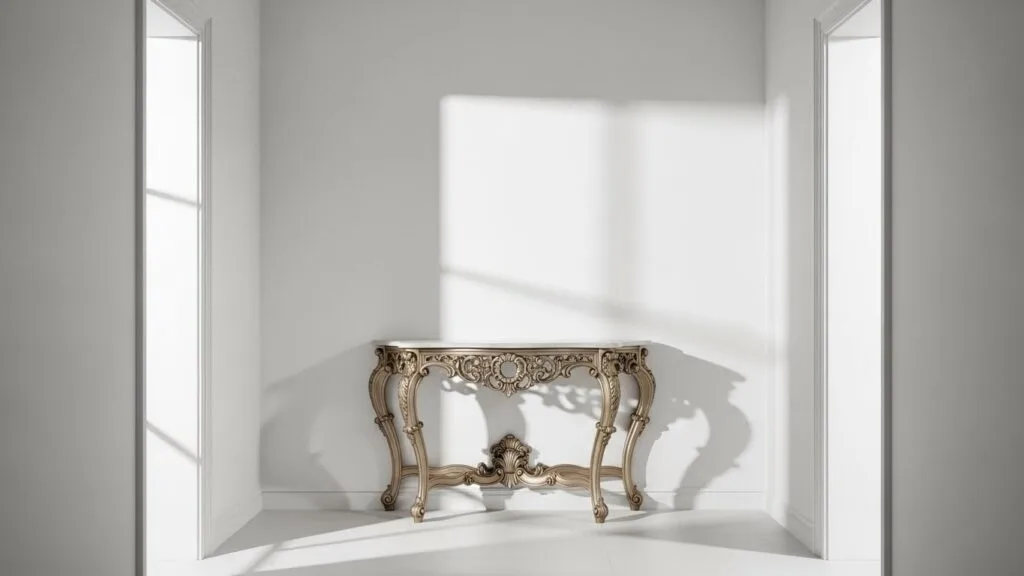
In the trajectory of contemporary interior architecture, a distinct pivot is occurring. The era of sterile, clinical minimalism is yielding to a more nuanced aesthetic. Design professionals are increasingly seeking “The Curated Tension”: a deliberate juxtaposition where the ornate historicism of the 18th century meets the restraint of the 21st.
At OE-FASHION Atelier, our hand-carved pieces are no longer exclusively commissioned for period properties. They are being deployed as sculptural anchors within brutalist villas, glass-walled penthouses, and commercial voids.
1. The Theory of Material Contrast: Haptic Disruption
Successful eclectic design relies not on matching styles, but on the manipulation of texture. Modern architecture prioritizes light-absorbing planes (concrete) or high-gloss surfaces (glazing). While architecturally impressive, these materials lack thermal warmth.
The Modern Plane
Condition: Low FrequencyHoned concrete and sintered stone provide a "Silent" background. They offer scale but lack the intricate shadow lines required to trap the eye.
The Haptic Disruption
Condition: High FrequencyIntroducing a piece of Neoclassical Furniture creates a visual interruption. Unlike veneered modern panels, the structural longevity of the solid beech substrate provides a "weight" that grounds the ephemeral nature of glass and steel interiors.
2. Spatial Anchoring: The Object as Sculpture
In an open-plan layout, furniture must define circulation zones without erecting walls. Here, the “New Classic” approach treats furniture not merely as equipment, but as freestanding sculpture.
Consider a Bespoke Carved Centre Table on a micro-cement floor. It does not need to blend in. Its cabriole legs command attention, grounding the space.
3. Tonal Integration: The "Ghost" Aesthetic
To successfully execute Modern Rococo, one must reconsider the finish. Historically, Rococo utilised polychromatic gold and tapestries. To align with modern sensibilities, we employ a strategy of "Monochromatic Unification."
🧪 The Ghost Protocol
By applying a matte white or charcoal lacquer to a highly ornate frame, we neutralize the historical "noise." This unifies the form, reducing the visual weight while preserving the shadow lines of the carving.
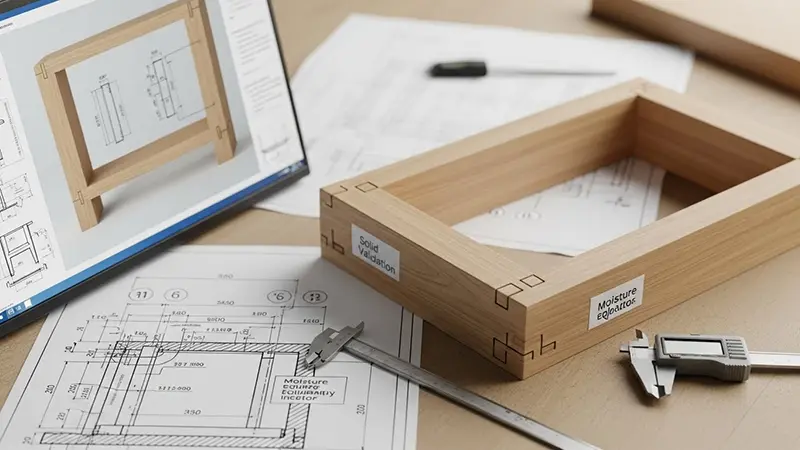
This requires precise Finish Layer Stack-Up control to ensure the paint does not pool in the deep carvings, maintaining the sharpness of the underlying acanthus details.
4. Bespoke Scaling for Modern Volumes
Authentic antiques often fail in modern architecture due to scale. 18th-century furniture was proportioned for intimate parlours. Contemporary residences, with 4-meter ceilings, dwarf these historical objects.
This is the primary advantage of our Bespoke Journey. We do not simply reproduce; we re-engineer.
- Volumetric Expansion: Extending dining tables to 3600mm to command large atriums.
- Vertical Alignment: Increasing throne chair back heights to 1600mm to align with double-height glazing.
- *All scaling maintains the original Golden Ratio of the carving density.*