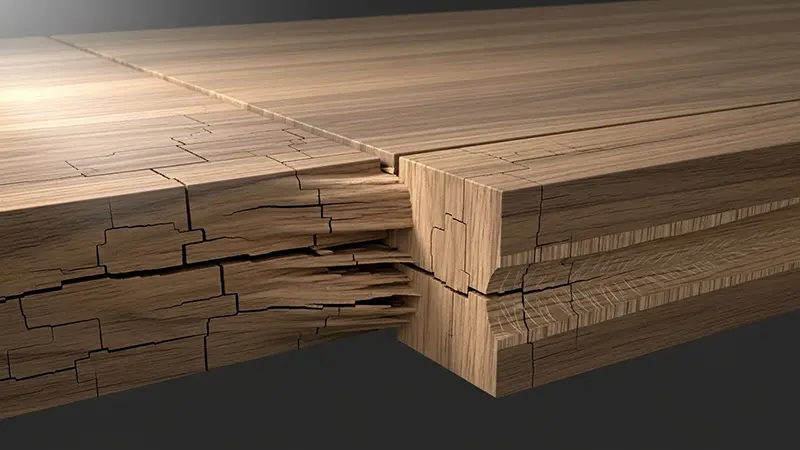
The global market is saturated with "Mahogany-finished" imitations. For the discerning project manager, authentication is not about aesthetics—it is a technical audit of density and fiber integrity.
Quick Identification Checklist for Buyers
- Natural Chatoyancy: Does the grain shimmer and change depth as you move?
- Weight-to-Volume Ratio: Does the piece feel significantly heavier than standard timber?
- Carving Sharpness: Are the acanthus leaves razor-sharp or "fuzzy" and sanded down?
- Joint Integrity: No visible gaps or filler putty in complex joinery areas.
Definition of Investment-Grade Mahogany
Genuine Solid Mahogany (specifically Swietenia macrophylla) is defined by its Anisotropy Stability (consistent strength that prevents warping in different climates). Unlike fast-growth substitutes, investment-grade timber allows for 30mm+ high-relief carving without risking "structural delamination" or cracking.
Common Market Misconceptions vs. OE-FASHION Protocol
⚠️ Industry Risk
Usage of "Philippine Mahogany" (Luan) or stained rubberwood. These lack tangential stability, leading to joint separation and "fuzzy" carving edges within 12-24 months of export.
✅ OE-FASHION Standard
Mandatory Tracheid Analysis (microscopic cell audit) and kiln-drying to 8-12% moisture. This ensures the frame withstands extreme dry or humid climates globally.
Engineering Logic: Why Density Equals Longevity
Authentic Mahogany yields crisp, flawless edges that define true Neoclassical pieces. If the grain feels "open" or "splintery" in the carved recesses, it indicates a low-density substitute. In our Rococo Royal Collection, we prioritize Hygroscopic Equilibrium (the point where wood stops reacting to moisture) to ensure lifelong stability.
Risk Analysis: Failure of Low-Density Timber
Based on our audit of 1,200+ export projects, the most common failure points in sub-standard "Mahogany-style" furniture include:
- Structural Warping: Long members (bed rails/table tops) bending due to inconsistent fiber density.
- Detail Loss: Hand-carved motifs losing their sharpness as wood fibers expand and "fuzz" over time.